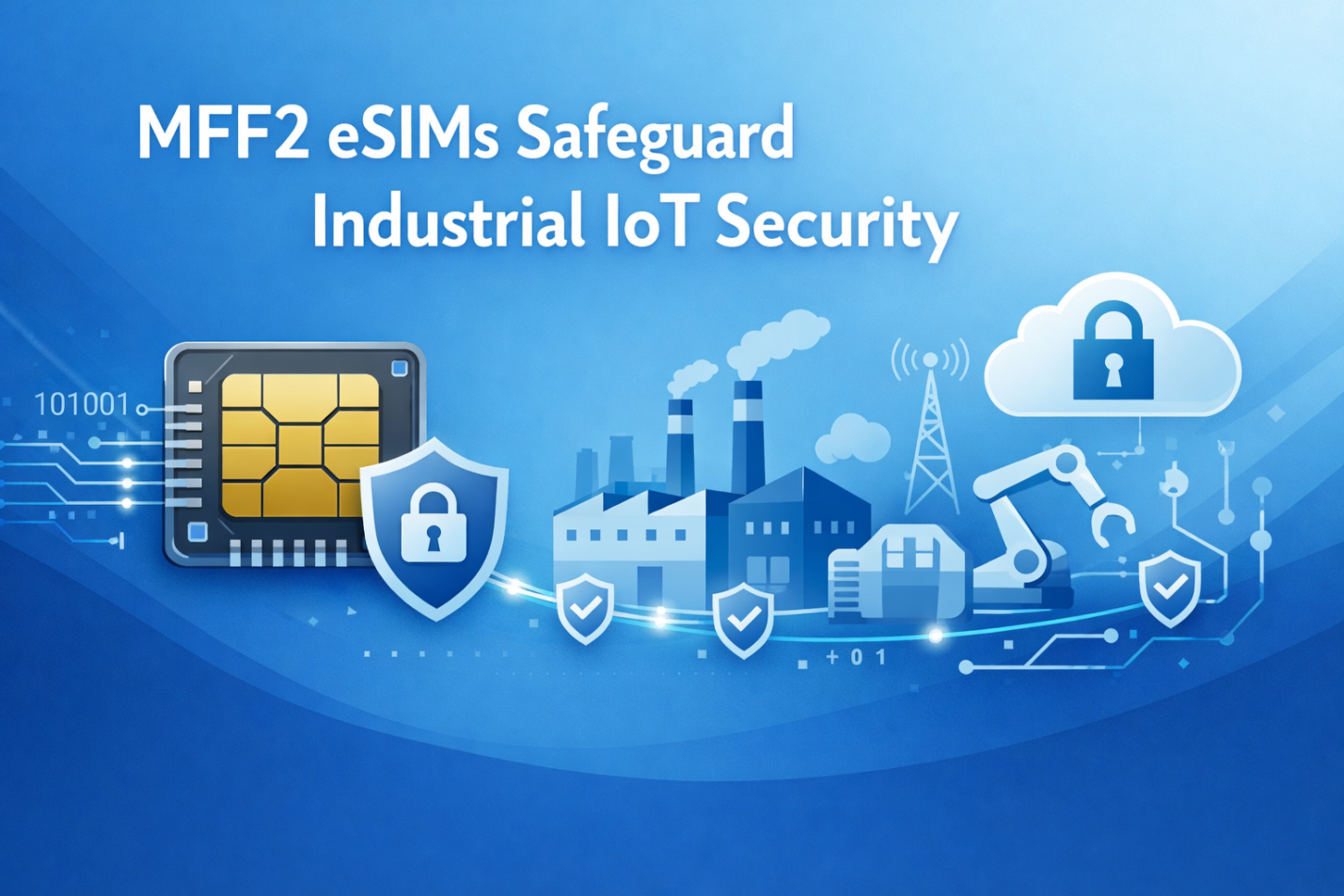
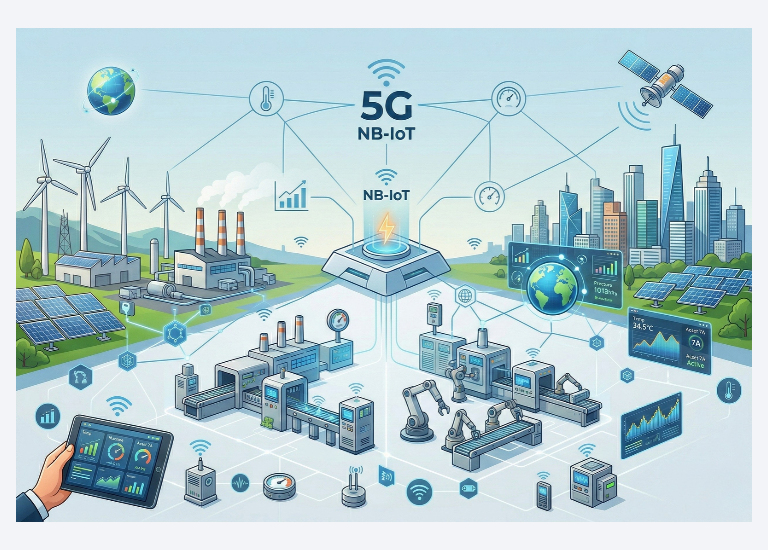
In 2026’s industrial environment, NB-IoT (Narrowband Internet of Things), as a core technology for massive IoT (mIoT), is profoundly redefining industrial connectivity and remote monitoring through its unique connection characteristics and continuously evolving standards (such as 3GPP Release 18).
What is NB-IoT? The 2026 Technical Benchmark
Before diving into applications, it is essential to define what NB-IoT is in the current landscape. NB-IoT (Narrowband Internet of Things) is a Low Power Wide Area Network (LPWAN) radio standard developed by 3GPP. It is specifically engineered for massive connectivity, extreme power efficiency, and deep signal penetration.
Its core technical characteristics and advantages include:
- Ultra-low power and long lifespan: Its design goal is to achieve a battery life of up to 10-15 years, supporting “set-and-forget” industrial applications.
- Deep coverage and penetration: Compared to traditional LTE, NB-IoT has stronger signal penetration, reaching challenging locations such as basements, underground utility corridors, or remote industrial areas.
- High connection density: Supports massive sensor clusters connecting simultaneously, accommodating numerous terminals per square kilometer.
- Low cost: With global deployment scaling up, NB-IoT module costs continue to decline and are now comparable to traditional technologies.
LPWAN Selection: LTE-M vs NB-IoT vs LoRaWAN
For business procurement and digital transformation leaders, understanding the advantages of each protocol is critical. The following table provides a professional LTE-M vs NB-IoT vs LoRaWAN comparison as of 2026:
| Feature Dimension | NB-IoT (3GPP) | LTE-M (eMTC) | LoRaWAN |
| Standard Type | Licensed / 5G Standard | Licensed / 5G Standard | Unlicensed / Proprietary |
| Voice Support | No | Yes (VoLTE) | No |
| Penetration (MCL) | Extreme | Strong | Strong |
| Mobility | Limited (Low-speed) | Full (Seamless Handover) | Very Limited |
| Latency | High (seconds) | Moderate (tens to hundreds of ms) | High (duty cycle limited) |
| Roaming Ability | Global Carrier Agreements | Global Carrier Agreements | Private Gateway Dependent |
| Deployment Cost | Low (Existing Infrastructure) | Medium (Higher Module Cost) | High (Requires Private Gateway) |
From a professional perspective, NB-IoT holds an absolute advantage in coverage depth and cost-effectiveness for water/gas metering, environmental monitoring, and static asset management. Conversely, LTE-M is better suited for scenarios requiring voice functionality or high-speed mobile logistics tracking.
Deep Applications in 2026 Industrial Remote Monitoring
The continuous evolution of NB-IoT is driving industrial monitoring from simple “data collection” to “intelligent prediction”. Here are three typical scenarios:
1. Predictive Maintenance for Critical Infrastructure
In large chemical plants or power stations, NB-IoT sensors monitor critical valve pressure, pump vibrations, and microscopic pipe leaks in real time. Its superior signal-penetration capability enables it to pass through heavy-metal shielding in engine rooms, transmitting periodically collected data to cloud-based AI models. By analyzing pressure fluctuation trends, the system issues early warnings before failures occur, avoiding costly unplanned downtime.
2. Digital Synergy for Energy and Utilities
By 2026, NB-IoT has been widely integrated into smart grids worldwide, used not only for remote meter reading but also for distribution automation. Through stable backhaul networks, grid operators can achieve minute-level monitoring of distributed energy resources (such as rooftop solar), optimizing power load balancing in real time.
3. HSE: Health, Safety, and Environment
In extreme environments such as deep mines or confined spaces, NB-IoT’s deep coverage becomes a lifeline. NB-IoT modules integrated into work uniforms monitor toxic gas concentrations and worker biometrics. Combined with 3GPP Release 18’s enhanced positioning capabilities, rescuers can quickly confirm personnel locations through base station positioning even dozens of meters underground.
Challenges and Strategic Recommendations
Despite technological maturity, practical deployment still requires attention to:
- Deep Indoor Modeling Challenges: Research shows that existing 3GPP path loss models may have 2-12 dB errors[1] in underground tunnels or deep indoor environments, requiring precise planning combined with geographical features (such as distance to corridors).
- Roaming and Lifecycle Management: Enterprises need eSIM/eUICC technology to reduce carrier lock-in and ensure devices stored in the field for over 10 years can safely perform firmware updates (FOTA).
- Network Sunset Risks: With 2G/3G shutdowns, NB-IoT becomes the primary migration bearer network; enterprises must establish ongoing device inventory mechanisms to address spectrum refarming.
Solving Global Deployment Challenges: The Zhongyi IoT Strategy
Despite the maturity of the technology, enterprises still face hurdles like carrier lock-in, high roaming costs, and complex device lifecycle management during international rollouts. Zhongyi IoT leverages its deep industrial experience to provide comprehensive solutions: End-to-end connectivity solutions, AIoT platforms, and hardware/software development.
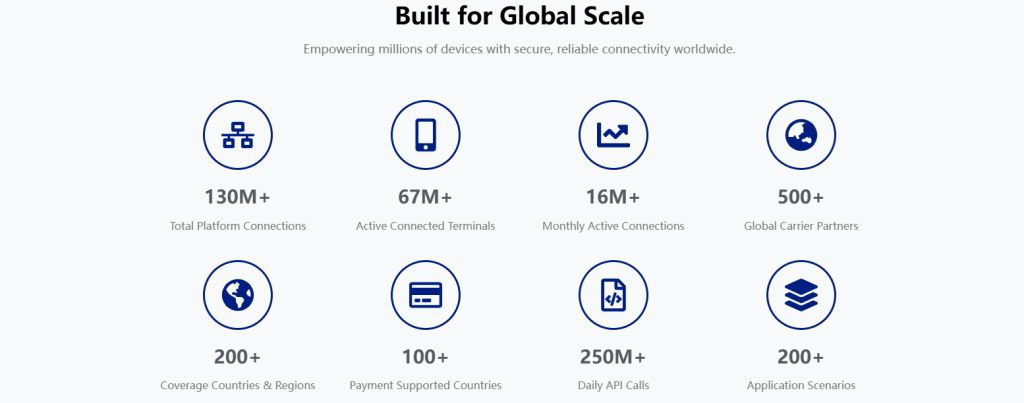
Partnering with a provider that offers global connectivity and a professional management platform is the key to success. Visit Zhongyi IoT for professional consultation, apply immediately for three free IoT SIM cards, and then begin your journey toward intelligent industrial transformation.
Reference:
[1] J. Thrane, K. M. Malarski, H. L. Christiansen and S. Ruepp, “Experimental Evaluation of Empirical NB-IoT Propagation Modelling in a Deep-Indoor Scenario,” GLOBECOM 2020 – 2020 IEEE Global Communications Conference, Taipei, Taiwan, 2020, pp. 1-6, doi: 10.1109/GLOBECOM42002.2020.9322360.
![Why 2G/3G/4G Backward Compatibility Still Matters for IoT in the 5G Era Alt: 2G/3G/4G in the 5G Era In the rush toward 5G and IoT (Internet of Things), it's easy to overlook the older networks that still power millions of devices. In the 5G era, backward compatibility with 2G/3G/4G remains crucial for IoT, primarily to ensure the proper operation of existing devices, provide wider coverage, reduce energy consumption and costs, and support a smooth transition. The Enduring Role of 2G/3G in a 5G World The shift to 5G is accelerating[1,2]. However, backward compatibility is not just about nostalgia; for several key reasons, it remains necessary both now and in the coming years: 1.Protecting the Online Operation of Existing IoT Devices Currently, there are hundreds of millions of IoT devices worldwide (such as smart electricity meters, water meters, gas meters, asset trackers, vehicle T-Boxes, alarm systems, etc.) that only support 2G, 3G, or 4G and lack 5G capabilities. Without backward compatibility or fallback to 2G/3G/4G, once operators shut down these legacy networks, devices will go offline directly, leading to business disruptions and security risks. 2.Coverage and Network Continuity In many rural, remote, or developing regions, 5G coverage is still limited, and even 4G is not fully available, while 2G/3G remains the most reliable wide-area communication method. Multi-mode NB‑IoT, LTE‑M, or Cat‑1/Cat‑4 modules supporting 2G/3G/4G can: Automatically downgrade to 4G, 3G, or 2G where 5G signals are weak Ensure devices such as vehicle trackers, logistics and warehouse monitors, and field environmental sensors “never go offline.” 3.Power Consumption and Battery Life Advantages 2G remains very efficient in low-speed, low-power scenarios. Some sensors or trackers using 2G solutions can operate 5–10 years without battery replacement. In comparison, 4G/5G consumes significantly more power in low-data scenarios. Therefore, retaining backward compatibility with 2G/3G/4G continues to provide the “most energy-efficient” connectivity option for low-power, long-lasting IoT devices. 4.Cost and Upgrade Pace Control The hardware costs and development thresholds for 2G/3G/4G modules and terminals are much lower than those for 5G modules, especially for high-volume, low-unit-price IoT products. With multi-mode and multi-band compatible modules, enterprises can: Gradually replace old devices with new 4G/5G modules over the next few years Instead of a “one-time replacement” when 2G/3G networks are shut down, thus controlling capital expenditure and operational costs 5. Transition Strategy and Network Downgrade Redundancy Backward-compatible multi-mode modules (supporting 2G/3G/4G/5G) provide flexibility for operators and customers: Operators can gradually shut down 2G/3G networks by country or region, first using 4G/5G for new services, while legacy devices continue to operate via downgraded connections; Devices can automatically downgrade to 4G/3G/2G when 5G signals are weak or congested, ensuring critical data is uploaded on time and avoiding the “high bandwidth but unreliable” problem. Practical Migration Paths The solution isn't to halt progress but to migrate strategically. Here’s how the industry is bridging the gap: Migration Path Terminology Core Advantages Use Cases Deployment Status(2026) LTE Cat-1 bis LTE Category 1 bis Simplified low-cost version of LTE 4G networks (bis = secondary optimized version) Leverages existing 4G base stations, moderate speed (10Mbps downlink), global roaming, low-cost modules Medium data volume IoT (e.g., POS terminals, vehicle tracking) Mainstream transition solution, covers all 4G areas LTE-M LTE-MTC (Machine Type Communication) Supports mobility, voice (VoLTE), 1Mbps speed, moderate penetration Mobile devices, voice-enabled IoT Strong coverage in Americas; expanding in Asia/Europe NB-IoT Narrowband IoT (Narrowband Internet of Things, single base station supports massive connections) Ultra-low power, strong penetration (+20dB), static low data rate (20-250kbps) Static sensors (e.g., meters, water meters, environmental monitoring) Leading deployment in Asia/Europe; limited in Americas 5G RedCap 5G Reduced Capability (eRedCap=enhanced version) Upgraded from Cat-1 bis, 150Mbps downlink, low power, massive connections Mid-to-high-end IoT requiring higher performance Commercial rollout starting 2026 in 5G coverage areas 5G NR mMTC 5G New Radio - massive Machine Type Communication 1M connections/km², ultra-low latency, network slicing Industry 4.0, smart cities Mature 5G network regions eSIM SGP.32 GSMA SGP.32 IoT eSIM (embedded SIM) international standard Remote operator switching, no card swaps needed, global roaming All cross-border IoT deployments Mainstream IoT eSIM standard in 2026 Contact Zhongyi IoT for IoT Connectivity Solutions From leveraging LTE Cat-1 bis for stability today to adopting flexible 5G eSIM solutions for tomorrow, businesses must ensure continuity while preparing for long-term evolution. This is why partnering with one of the top IoT connectivity providers is essential. Zhongyi IoT delivers a comprehensive IoT connectivity service designed to support seamless migration, global coverage, and remote management. To discover how the comprehensive IoT connectivity service can future-proof your deployments, visit Zhongyi IoT. References: [1]2G / 3G Network Shutdown Status and Challenges. Available at: https://www.smartviser.com/post/2g-3gnetworkshutdown [2]Technology upgrades and legacy network sunsets on the rise. Available at: https://www.gsma.com/connectivity-for-good/spectrum/technology-upgrades-and-legacy-network-sunsets-on-the-rise/ TDK SEO Title: Why 2G/3G/4G Backward Compatibility Still Matters for IoT in the 5G Era SEO Keywords: 5G and IoT, 2G 3G 4G, eSIM, IoT connectivity providers, IoT connectivity service SEO Description: Discover why maintaining 2G/3G/4G support is essential for IoT devices in the 5G era, and learn about multiple migration paths such as LTE Cat-1 bis, LTE-M, NB-IoT, and eSIM SGP.32. URL: /2g-3g-4g-backward-compatibility-matters-for-iot-5g-era/](https://www.zyiotnet.com/wp-content/uploads/2026/03/2g-3g-4g-in-the-5g-era.png)