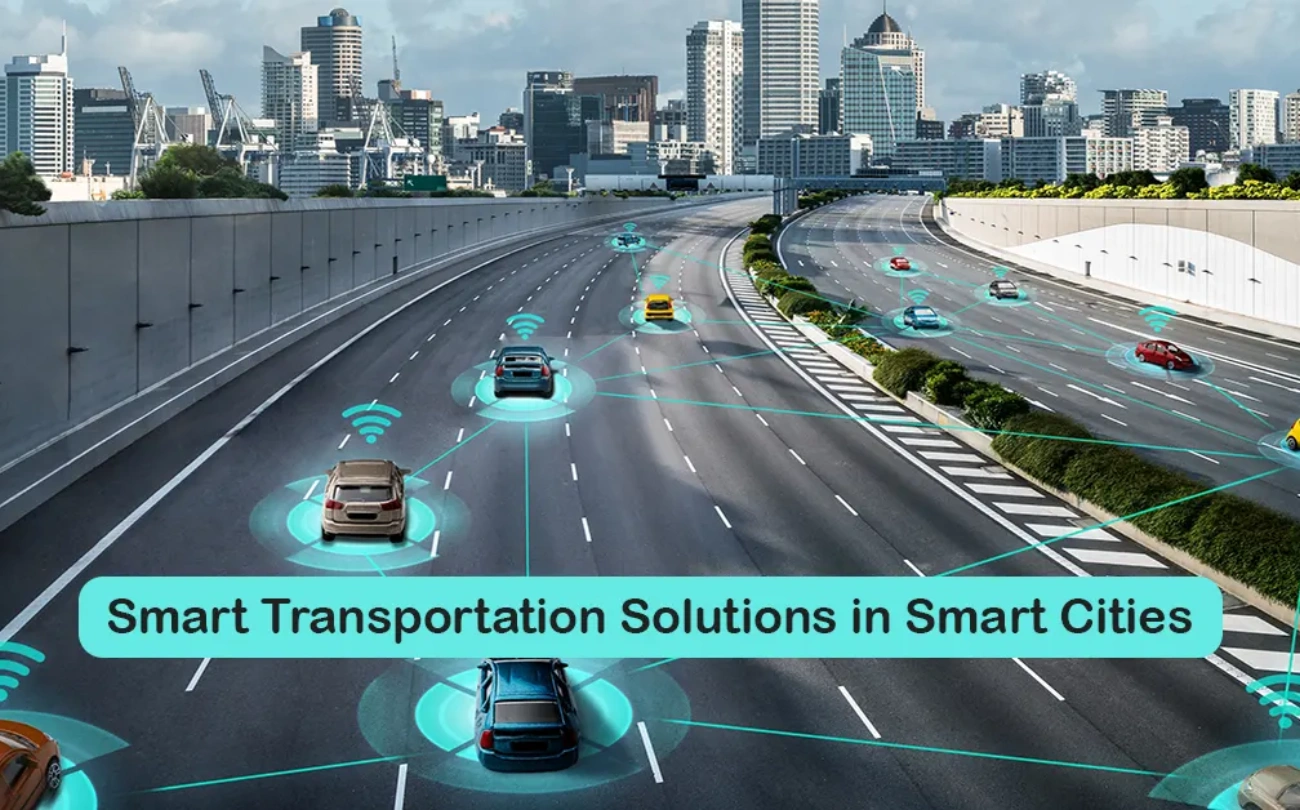
If your EV fleet is missing routes or your chargers keep going offline, the root cause is often the same: weak connectivity and poor data visibility. IoT in transportation helps by keeping vehicles and charging assets connected and by turning telemetry into maintenance, routing, and grid-aware charging decisions.
Why Connectivity And Data Matter More As EVs Scale
Read more: IoT SIM vs. Consumer SIM: Why Industrial Routers Need M2M Data Plans
EV adoption is now widespread. The International Energy Agency reports that global electric car sales exceeded 17 million in 2024, capturing more than 20% of the market[1]; as EVs become increasingly affordable across more markets, their market share is expected to surpass 40% by 2030[2].
Charging networks are also expanding rapidly: more than 1.3 million public charging points were added globally in 2024, an increase of over 30% compared to 2023[3].
At scale, transport connectivity solutions and IoT applications in transportation must cover vehicle telemetry, charger operations, and grid interaction, not just “getting online.” The real KPI is operational continuity: fewer stranded drivers, fewer charger outages, and fewer surprise power constraints at busy sites.
Connectivity Standards That Keep Vehicles, Chargers, And Grids Talking
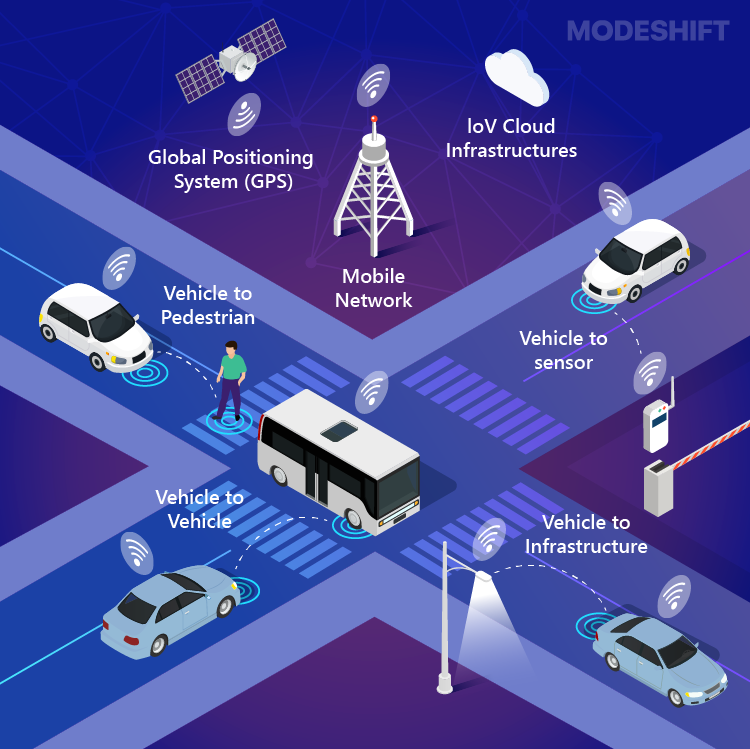
Interoperability is where IoT solutions for transportation deliver compounding value. Three protocols are especially practical for EV charging programs.
The Open Charge Alliance describes OCPP as a uniform method of communication between charge points and central systems, enabling any central system to connect with any charge point regardless of vendor[4].
The same organization describes OSCP as a way to communicate physical net capacity from a distribution system operator (or site owner) to the back-office of the charge spot operator, including a 24-hour prediction of available local capacity[5].
For vehicle-to-charger interaction, CharIN explains that “Plug & Charge” enables automated communication and billing between the EV and charging station without external identification, and that the necessary interfaces are defined in the ISO 15118 standard family[6].
| Layer | What Must Connect | What Data/Control Flows | Example Standards |
| Charger↔Backend | Station and central platform | Status, faults, metering, transactions, config | OCPP |
| Grid↔Charging Ops | Capacity provider and operator | Capacity forecasts, load constraints, schedules | OSCP |
| EV ↔ Charger | Vehicle comms and charger comms | Automated session initiation and billing | ISO 15118 (via Plug & Charge) |
Edge Computing Helps When Latency And Resiliency Matter
Connectivity is not only “can it connect?” It is also “can it respond fast enough?” Edge computing moves core network and cloud capabilities closer to customer devices, reducing the physical distance for communication and lowering latency.
ETSI (European Telecommunications Standards Institute) positions Multi-access Edge Computing (MEC) for use cases such as V2X and IoT, which align with connected transportation and charging hubs.
In EV programs, edge is commonly used for anomaly detection, near-real-time load control at depots or hubs, and “local continue, later sync” operations.
Data-Driven Operations Improve Uptime, Cost Control, And Battery Health
After connectivity is stable, the next win is decision-quality data: a small set of high-value signals plus automated actions.
1. Predictive Maintenance And Asset Management
Research on data-driven battery health monitoring in fleet management systems describes how degradation prognosis can identify potential failures and trigger preventive maintenance actions.
For charging networks, newer OCPP versions expand device management and smart-charging functions. The Open Charge Alliance lists device management, smart charging, and added security for OCPP 2.0.1, and it lists bidirectional charging blocks and ISO 15118-20 bidirectional support for OCPP 2.1.
2. Smarter Routing And Charging Planning
Research on charging-and-routing optimization shows the value of planning trips with charging constraints and infrastructure availability handled inside the optimization.
Vehicle Grid Integration And V2G Make EVs Part Of The Energy System
EVs increasingly connect to energy planning. The U.S. Department of Energy (DOE) frames Vehicle Grid Integration (VGI) as critical to transportation electrification and grid modernization, spanning impacts on EVs and the grid, grid services, codes and standards, and cybersecurity[7].
The DOE also describes a “portfolio of approaches” for beneficial VGI that helps stakeholders meet growing energy demands amid rising EV deployment.
For charging operators, the “connectivity + data” pathway looks like this: use OSCP-style capacity signals to schedule charging within constraints, and adopt protocol support for bidirectional charging as vehicles and chargers enable it.
Cybersecurity Is Now A Core Requirement For Connected Charging
More connectivity means more risk. Extreme-fast-charging ecosystems rely on multiple interconnected subsystems, which increases exposure to physical and cyber threats.
Translate this into procurement requirements: encrypted communications, strong device identity, secure updates, and continuous monitoring with clear incident processes.
Zhongyi IoT Connectivity Options For EV And Charging Deployments
IoT in transportation supports EVs by delivering reliable connectivity and actionable data, improving uptime and enabling grid-aware charging. If you are planning a deployment, start with a short connectivity pilot using Zhongyi IoT products, validate performance and integrations, then scale with centralized management.
Zhongyi IoT provides 3 free test SIM cards and a 7–15-day free trial period. Contact us now!

References:
[1] Executive Summary – Global EV Outlook 2025. Available at: https://www.iea.org/reports/global-ev-outlook-2025/executive-summary (Accessed: 31 March 2026)
[2] More than 1 in 4 cars sold worldwide this year is set to be electric as EV sales continue to grow. Available at: https://www.iea.org/news/more-than-1-in-4-cars-sold-worldwide-this-year-is-set-to-be-electric-as-ev-sales-continue-to-grow (Accessed: 31 March 2026)
[3] Electric Vehicle Charging – Global EV Outlook 2025. Available at: https://www.iea.org/reports/global-ev-outlook-2025/electric-vehicle-charging (Accessed: 31 March 2026)
[4] Open charge point protocol. Available at: https://openchargealliance.org/protocols/open-charge-point-protocol/ (Accessed: 31 March 2026)
[5] Open smart charging protocol. Available at: https://openchargealliance.org/protocols/open-smart-charging-protocol/ (Accessed: 31 March 2026)
[6] Plug & Charge at CharIN: Standardized and interoperable, Plug & Charge services for secure EV charging. Available at: https://www.charin.global/technology/plug-charge/ (Accessed: 31 March 2026)
[7] Vehicle Grid Integration Assessment Report. Available at: https://www.energy.gov/cmei/vehicles/articles/vehicle-grid-integration-assessment-report (Accessed: 31 March 2026)