How the IoT SIM Cloud Platform Works
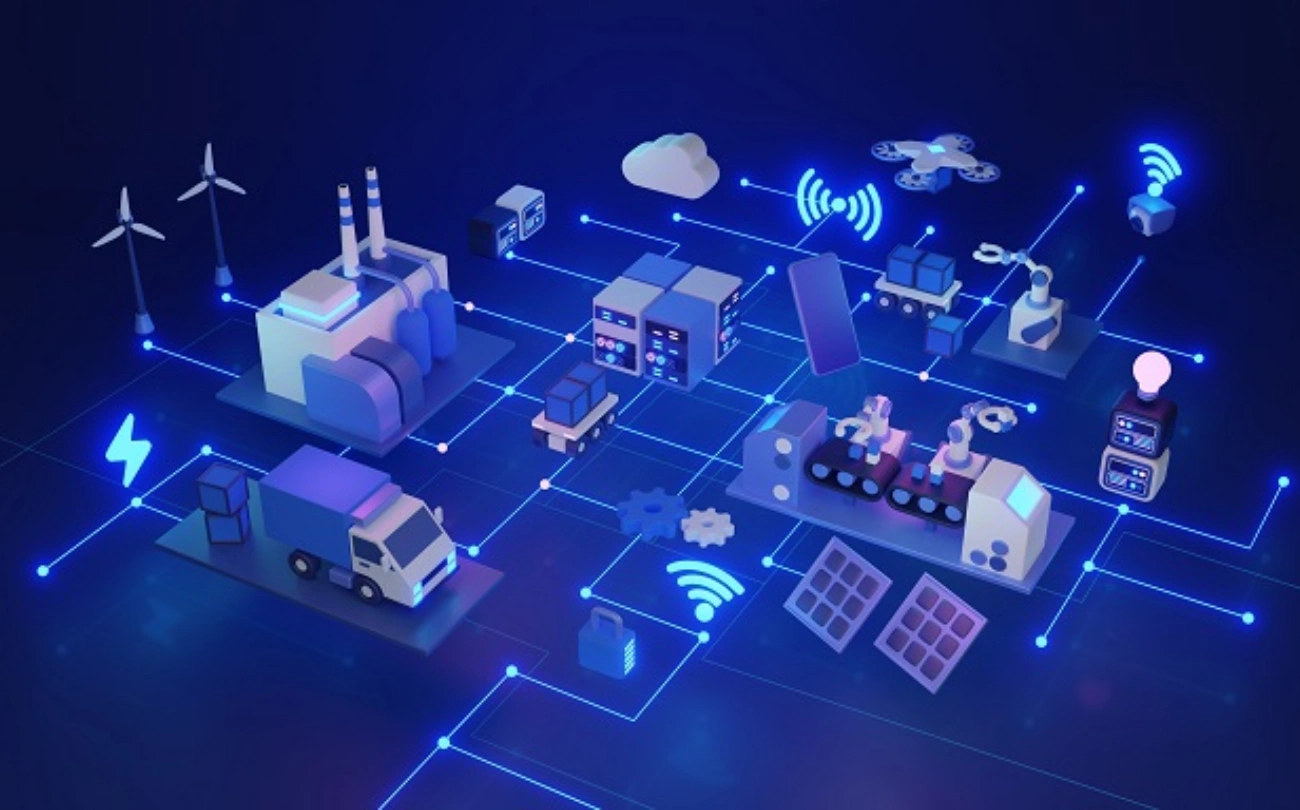
The IoT SIM Cloud Platform provides centralized management, monitoring, and control for thousands of IoT devices. By connecting SIMs to a cloud-based dashboard, businesses can:
- Monitor device connectivity and performance in real time
- Receive automated alerts for network issues or abnormal usage
- Manage SIM activation, suspension, and configuration remotely
- Integrate SIM data with enterprise systems like ERP or logistics platforms
Zhongyi IoT Cards offers a scalable cloud platform capable of handling large IoT deployments with high reliability and security.
What is an IoT SIM Cloud Platform?
Definition and Purpose
The IoT SIM Cloud Platform is a centralized, cloud-based system for managing IoT SIMs and connected devices. It allows businesses to maintain complete control, monitor data usage, and ensure reliable communication across multiple devices and locations.
Key Features
- Device Monitoring: Real-time tracking of connectivity and performance
- Data Usage Management: Set limits and avoid overage charges
- Security Management: Encrypted communication and secure data routing
- Multi-Network Support: Automatic switching between cellular networks
- Analytics and Reporting: Usage statistics, performance trends, and predictive insights
Can IoT SIMs Experience Communication Interruptions?
Causes of Interruption
- Network coverage gaps in remote or indoor areas
- Device or SIM malfunctions
- Low battery in field devices
- Network congestion due to high device density
Mitigation via Cloud Platform
- Automatic network switching for uninterrupted connectivity
- Retry mechanisms for failed transmissions
- Remote diagnostics for troubleshooting without on-site visits
- Alerting and reporting for immediate corrective action
How the IoT SIM Cloud Platform Optimizes Traffic
Data Compression and Aggregation
- Compress small data packets and combine multiple points into one transmission to reduce overhead
Scheduled and Conditional Transmission
- Send data only at scheduled intervals or when conditions are met, saving bandwidth
Traffic Prioritization
- Prioritize critical messages over routine data
- Non-critical data can be sent during off-peak hours
Usage Limits and Alerts
- Set daily/monthly data limits per device
- Receive automatic alerts to prevent overages
Multi-Network Optimization
- Choose the most efficient network (NB-IoT, Cat-M1, 4G) for low cost and energy consumption
Remote Control via IoT SIM Cloud Platform
SIM Activation and Deactivation
- Activate or suspend SIMs remotely when devices are deployed or lost
Configuration Updates
- Change APN settings or device policies without physical access
Diagnostics and Troubleshooting
- Check connectivity, signal strength, and logs remotely
Firmware and Software Updates
- Push updates or security patches to devices via the cloud
Alerts and Notifications
- Receive real-time notifications for anomalies, enabling immediate action
Conclusion
The IoT SIM Cloud Platform revolutionizes IoT device management by providing centralized monitoring, traffic optimization, and remote control. It addresses critical challenges such as network reliability, operational costs, and large-scale device management.
Zhongyi IoT Cards delivers an advanced IoT SIM Cloud Platform that ensures continuous, secure, and cost-effective connectivity for global IoT deployments, from logistics and smart cities to industrial automation.
Frequently Asked Questions (FAQ)
What is an IoT SIM Cloud Platform?
A: A centralized cloud system for managing IoT SIMs and connected devices.
Can IoT SIMs experience interruptions?
A: Yes, due to network gaps, device issues, or low battery. Cloud platforms mitigate these risks.
How does traffic optimization work?
A: Through compression, scheduling, prioritization, usage limits, and multi-network selection.
Can devices be controlled remotely?
A: Yes, including SIM activation, configuration changes, diagnostics, and firmware updates.
Is this platform suitable for global IoT deployments?
A: Absolutely. Platforms like Zhongyi IoT Cards support multi-network, multi-country connectivity.
How does traffic optimization save costs?
A: By reducing unnecessary data usage, prioritizing critical messages, and selecting the most efficient network.
![Why 2G/3G/4G Backward Compatibility Still Matters for IoT in the 5G Era Alt: 2G/3G/4G in the 5G Era In the rush toward 5G and IoT (Internet of Things), it's easy to overlook the older networks that still power millions of devices. In the 5G era, backward compatibility with 2G/3G/4G remains crucial for IoT, primarily to ensure the proper operation of existing devices, provide wider coverage, reduce energy consumption and costs, and support a smooth transition. The Enduring Role of 2G/3G in a 5G World The shift to 5G is accelerating[1,2]. However, backward compatibility is not just about nostalgia; for several key reasons, it remains necessary both now and in the coming years: 1.Protecting the Online Operation of Existing IoT Devices Currently, there are hundreds of millions of IoT devices worldwide (such as smart electricity meters, water meters, gas meters, asset trackers, vehicle T-Boxes, alarm systems, etc.) that only support 2G, 3G, or 4G and lack 5G capabilities. Without backward compatibility or fallback to 2G/3G/4G, once operators shut down these legacy networks, devices will go offline directly, leading to business disruptions and security risks. 2.Coverage and Network Continuity In many rural, remote, or developing regions, 5G coverage is still limited, and even 4G is not fully available, while 2G/3G remains the most reliable wide-area communication method. Multi-mode NB‑IoT, LTE‑M, or Cat‑1/Cat‑4 modules supporting 2G/3G/4G can: Automatically downgrade to 4G, 3G, or 2G where 5G signals are weak Ensure devices such as vehicle trackers, logistics and warehouse monitors, and field environmental sensors “never go offline.” 3.Power Consumption and Battery Life Advantages 2G remains very efficient in low-speed, low-power scenarios. Some sensors or trackers using 2G solutions can operate 5–10 years without battery replacement. In comparison, 4G/5G consumes significantly more power in low-data scenarios. Therefore, retaining backward compatibility with 2G/3G/4G continues to provide the “most energy-efficient” connectivity option for low-power, long-lasting IoT devices. 4.Cost and Upgrade Pace Control The hardware costs and development thresholds for 2G/3G/4G modules and terminals are much lower than those for 5G modules, especially for high-volume, low-unit-price IoT products. With multi-mode and multi-band compatible modules, enterprises can: Gradually replace old devices with new 4G/5G modules over the next few years Instead of a “one-time replacement” when 2G/3G networks are shut down, thus controlling capital expenditure and operational costs 5. Transition Strategy and Network Downgrade Redundancy Backward-compatible multi-mode modules (supporting 2G/3G/4G/5G) provide flexibility for operators and customers: Operators can gradually shut down 2G/3G networks by country or region, first using 4G/5G for new services, while legacy devices continue to operate via downgraded connections; Devices can automatically downgrade to 4G/3G/2G when 5G signals are weak or congested, ensuring critical data is uploaded on time and avoiding the “high bandwidth but unreliable” problem. Practical Migration Paths The solution isn't to halt progress but to migrate strategically. Here’s how the industry is bridging the gap: Migration Path Terminology Core Advantages Use Cases Deployment Status(2026) LTE Cat-1 bis LTE Category 1 bis Simplified low-cost version of LTE 4G networks (bis = secondary optimized version) Leverages existing 4G base stations, moderate speed (10Mbps downlink), global roaming, low-cost modules Medium data volume IoT (e.g., POS terminals, vehicle tracking) Mainstream transition solution, covers all 4G areas LTE-M LTE-MTC (Machine Type Communication) Supports mobility, voice (VoLTE), 1Mbps speed, moderate penetration Mobile devices, voice-enabled IoT Strong coverage in Americas; expanding in Asia/Europe NB-IoT Narrowband IoT (Narrowband Internet of Things, single base station supports massive connections) Ultra-low power, strong penetration (+20dB), static low data rate (20-250kbps) Static sensors (e.g., meters, water meters, environmental monitoring) Leading deployment in Asia/Europe; limited in Americas 5G RedCap 5G Reduced Capability (eRedCap=enhanced version) Upgraded from Cat-1 bis, 150Mbps downlink, low power, massive connections Mid-to-high-end IoT requiring higher performance Commercial rollout starting 2026 in 5G coverage areas 5G NR mMTC 5G New Radio - massive Machine Type Communication 1M connections/km², ultra-low latency, network slicing Industry 4.0, smart cities Mature 5G network regions eSIM SGP.32 GSMA SGP.32 IoT eSIM (embedded SIM) international standard Remote operator switching, no card swaps needed, global roaming All cross-border IoT deployments Mainstream IoT eSIM standard in 2026 Contact Zhongyi IoT for IoT Connectivity Solutions From leveraging LTE Cat-1 bis for stability today to adopting flexible 5G eSIM solutions for tomorrow, businesses must ensure continuity while preparing for long-term evolution. This is why partnering with one of the top IoT connectivity providers is essential. Zhongyi IoT delivers a comprehensive IoT connectivity service designed to support seamless migration, global coverage, and remote management. To discover how the comprehensive IoT connectivity service can future-proof your deployments, visit Zhongyi IoT. References: [1]2G / 3G Network Shutdown Status and Challenges. Available at: https://www.smartviser.com/post/2g-3gnetworkshutdown [2]Technology upgrades and legacy network sunsets on the rise. Available at: https://www.gsma.com/connectivity-for-good/spectrum/technology-upgrades-and-legacy-network-sunsets-on-the-rise/ TDK SEO Title: Why 2G/3G/4G Backward Compatibility Still Matters for IoT in the 5G Era SEO Keywords: 5G and IoT, 2G 3G 4G, eSIM, IoT connectivity providers, IoT connectivity service SEO Description: Discover why maintaining 2G/3G/4G support is essential for IoT devices in the 5G era, and learn about multiple migration paths such as LTE Cat-1 bis, LTE-M, NB-IoT, and eSIM SGP.32. URL: /2g-3g-4g-backward-compatibility-matters-for-iot-5g-era/](https://www.zyiotnet.com/wp-content/uploads/2026/03/2g-3g-4g-in-the-5g-era.png)